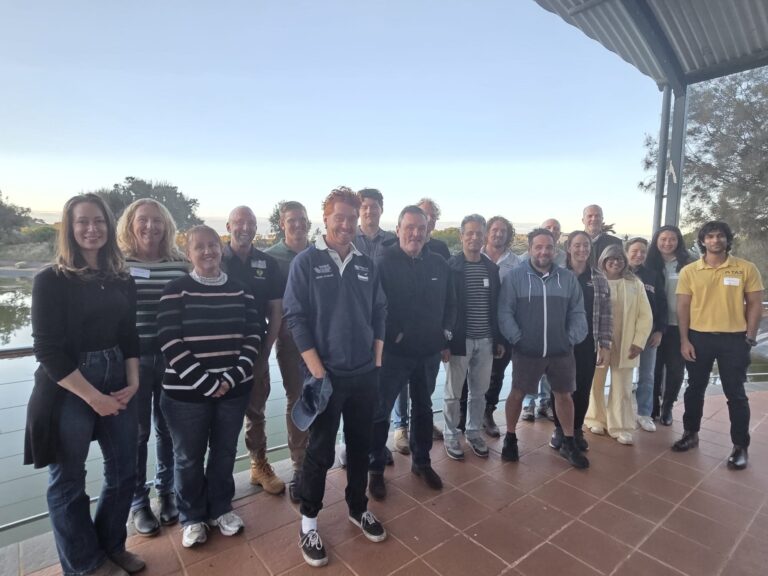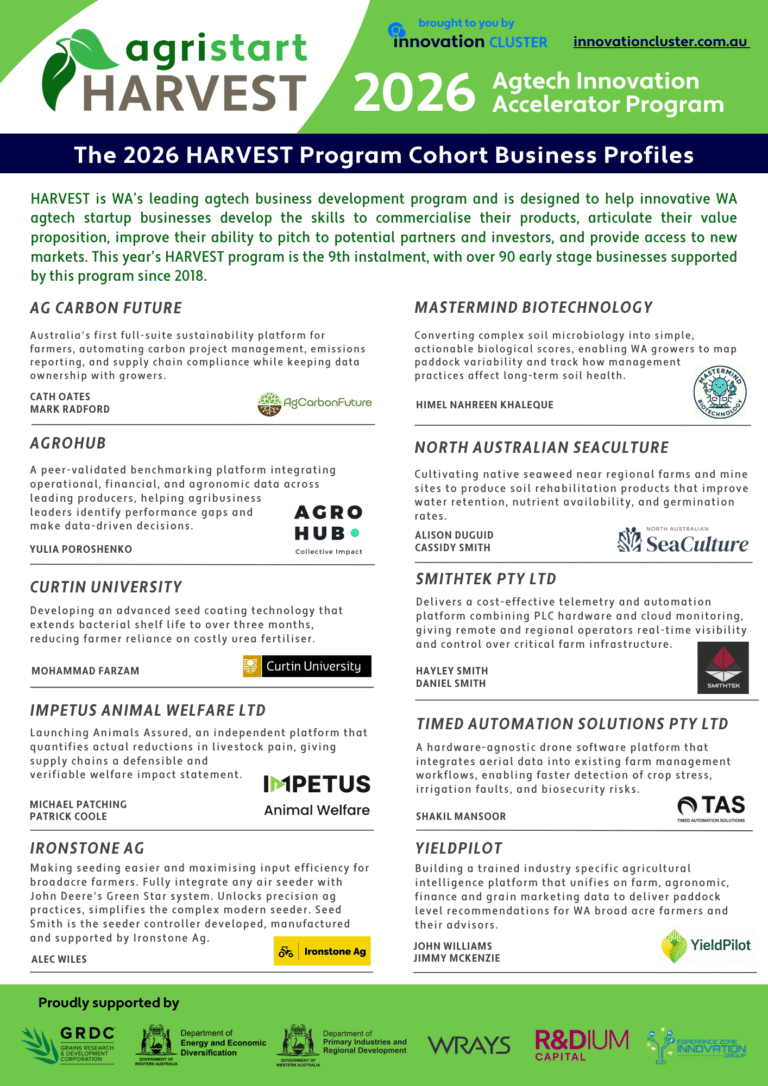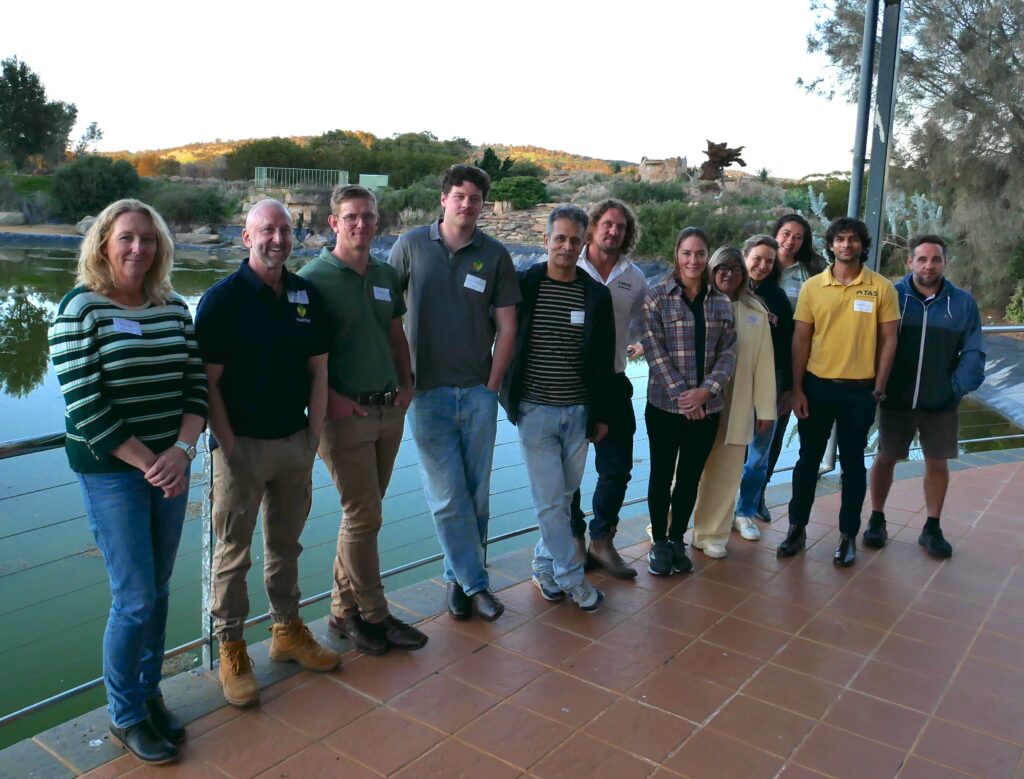
2026 HARVEST Agtech Accelerator Program Bootcamp
HARVEST is proudly supported by our major sponsors Grains Research and Development Corporation, Department of Energy and Economic Diversification, Department of Primary Industries & Regional Development.
DAY 1 — Monday 22 June 2026
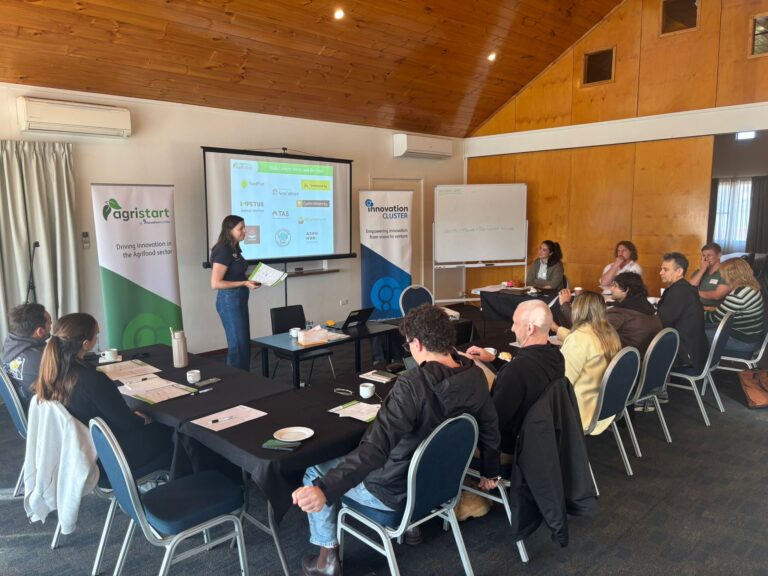
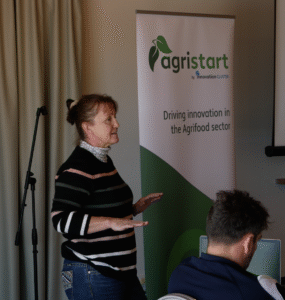
Tash opened the bootcamp by grounding the cohort in the scale and opportunity of Australian agriculture — a sector representing $80.2 billion in exports and 12.4% of goods and services exports in 2024–25 — before turning to the real question: why is agtech adoption still so slow?
Her answer challenged a common assumption: it’s not about grower capability. The barriers are systemic — high costs with uncertain ROI, proprietary ecosystems that won’t talk to each other, a shortage of trusted technical advisors, and tools that deliver maps rather than decisions. The shift she called for is from ‘pretty maps’ to ‘decision agriculture’.
Across both her morning and afternoon sessions, Tash pushed founders to start with the problem, not the product — distinguishing between their customer, their end user, and their beneficiary, and stress-testing their value proposition against the ‘Grower 1% Rule’: that even a 1% improvement in gross margin matters enormously to a farmer, and that’s the language that opens doors.
She closed with practical guidance on pitching to different audiences, reinforcing that in agriculture, relationships, trust and showing up in person still matter more than a polished deck.
Grower Perspective
Presenter: Belinda Lay — farmer, Non-Executive Director, Esperance Zone Innovation Group
Belinda shared her journey as a farmer experimenting with IoT devices and data analysis on her mixed grains and sheep operation at Coolindown Farms. She spoke honestly about the impact of technology failures on farm — a grounding reality check for the cohort.
Belinda then introduced the Esperance Zone Innovation (EZI) grower group — a collective of early adopter producers. Their SPROUT program connects agtech businesses with willing farmers and farms for beta testing, giving startups real-world validation environments.
Belinda listened to each business present their ‘Why’ — a facilitated session where every cohort member shared the deeper purpose behind what they’re building.
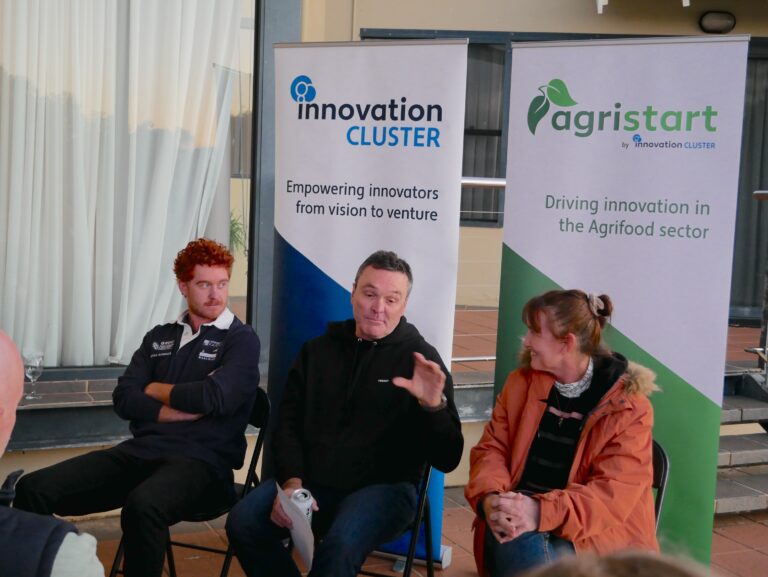
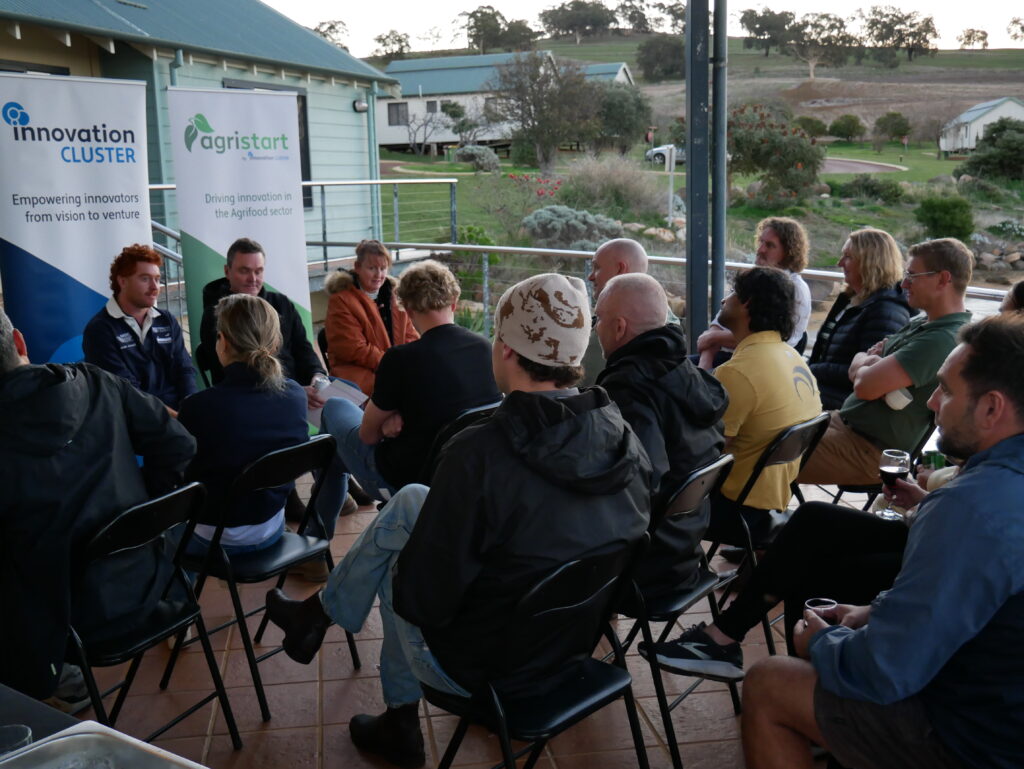
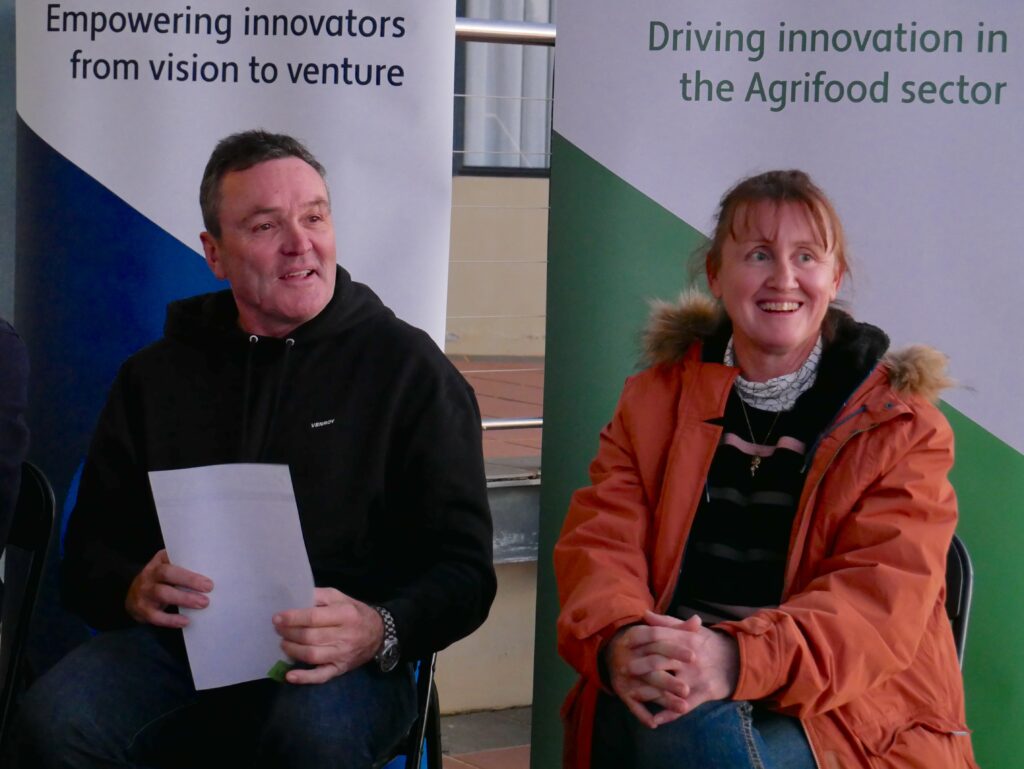
Ask the Growers — Panel Discussion
Panellists: Brad Jones (Bungulla Farms), Belinda Lay (Coolindown Farms / EZI), Joel Kelly (Waldijup Farms)
Raw, honest grower voices giving the cohort direct feedback on what they actually need.
Theme 1: Integration is the #1 Problem
- Systems don’t talk to each other — unless you commit to one manufacturer
- Growers want one open, integrated platform that consolidates all data and controls all tools
- Farming apps exist in silos — they haven’t collaborated, and growers feel this every day
- A holistic system that works across both cropping and livestock is the dream
- The data consolidation question is also a data ownership question: who owns it?
Theme 2: Time and Usability
- Biggest restriction is time — growers know what they want but can’t build it themselves
- Must be plug-and-play with real support; if there’s no support, it won’t be adopted
- Needs to be easy and accessible across the full ag value chain — including share farmers
- The next generation will be more digitally literate, but the transition period is now and it needs bridging
Theme 3: Data Ownership & Regulation
- In Australia, farm data is not legally owned by the farmer — it can’t be declared an asset in court
- Right to repair is a significant unresolved issue
- Regulatory pressure is building — EU canola requirements are essentially a data management problem
- Upcoming regulatory issues around practices like spreading pig manure will create new compliance needs
- Sustainability reporting is a data management challenge, not just an operational one
Theme 4: Autonomous Tech Ahead of the Rules
- Autonomous vehicles are here — but road rules for unmanned vehicles are not
- Banks have no idea how to finance a robot
- The mining sector gets regulatory clarity before agriculture — this needs to change
Theme 5: Carbon & Sustainability
- Carbon offsets seen as a genuine ROI opportunity — but more measurement consistency is needed before growers commit fully
- Current frameworks don’t reward early adopters — they reward laggards. Innovators are not recognised
- Third-party liability is the biggest perceived risk in carbon projects — e.g., a massive fire: where does liability sit?
- Every acre that can produce something needs to be producing something
Theme 6: Support and Expertise Gaps
- Lack of expert support is the main reason platforms are under-utilised on farm
- Growers have the idea in their head — they need simpler software and someone alongside them to use it
On the Risk Profile of Farming
- Farmers already carry significant risk — new tech adds to it if it’s not reliable
- The variety, independence and purpose of farming is what keeps people in it (‘feeding the world’)
- The pace of technological change is fast — improvements are happening quickly
- Failed tech promises have eroded trust and raised the bar for what growers will adopt.
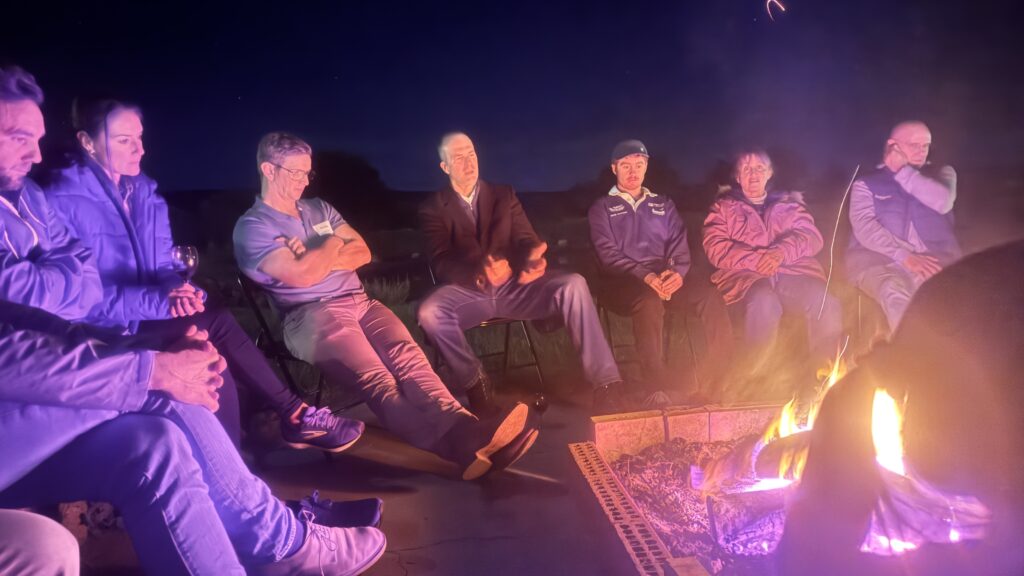
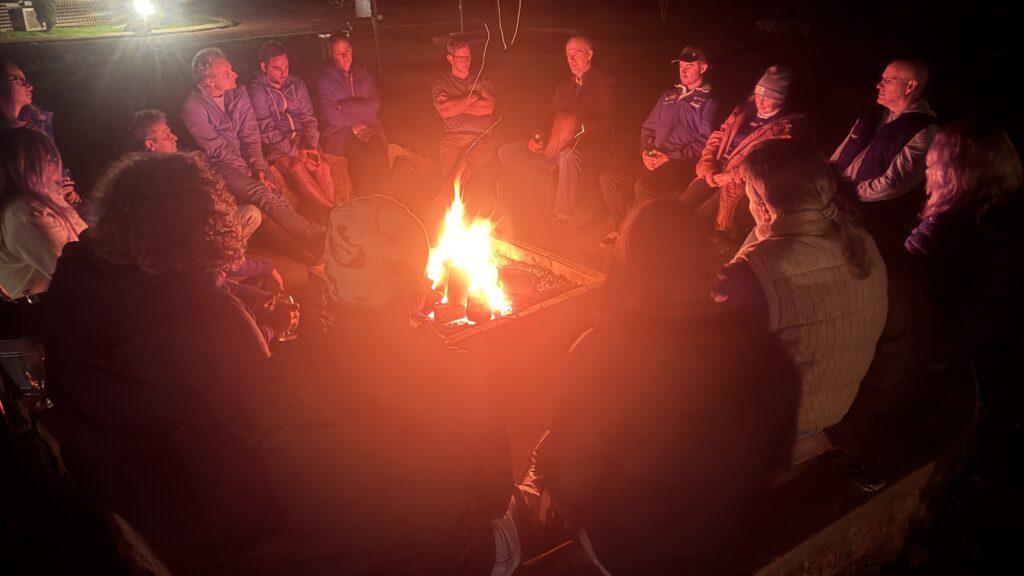
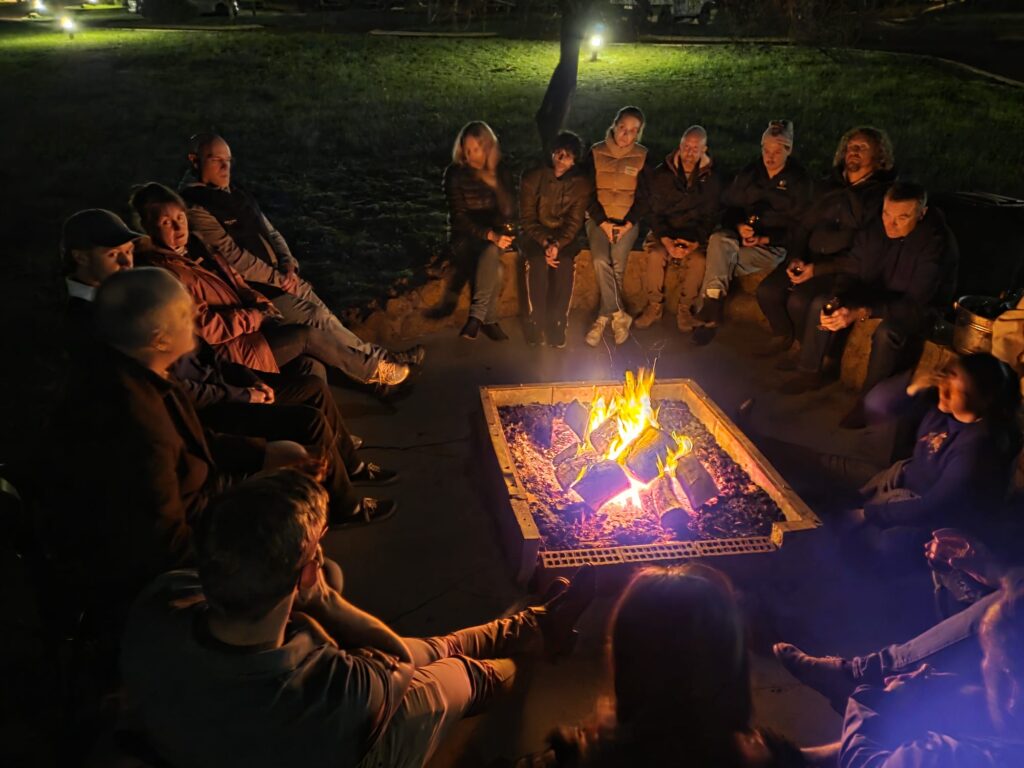
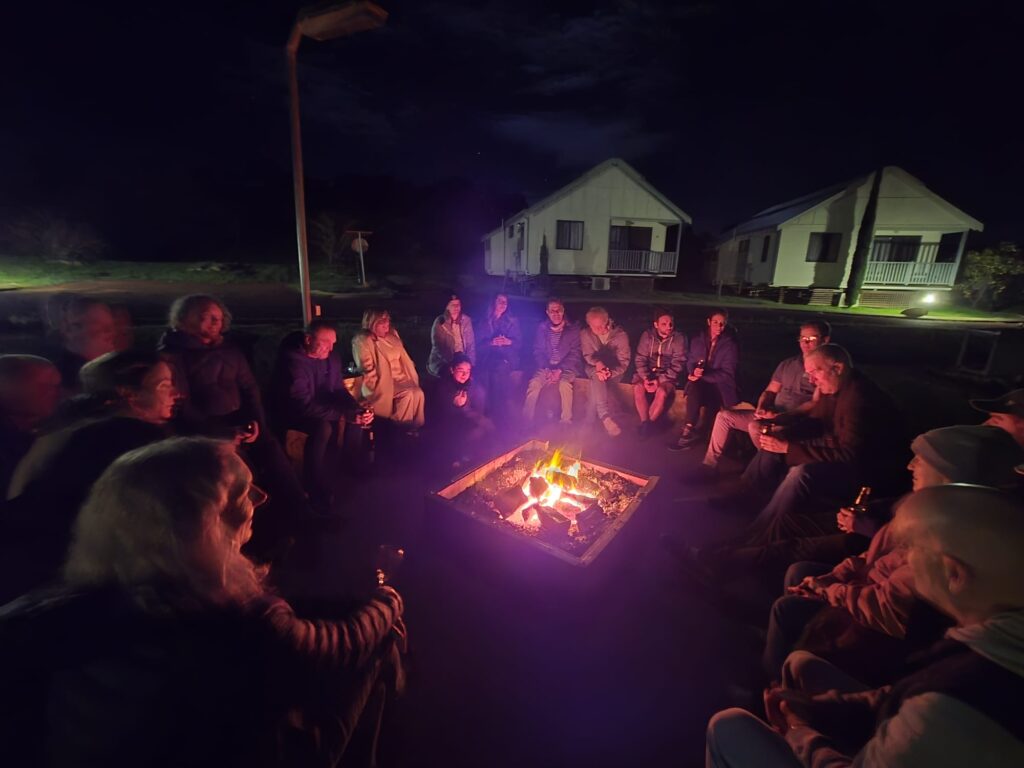
Dinner & Fireside Chat
Host: Simon Foley — experienced founder and business leader
The evening wrapped with a fireside chat from Simon Foley, who structured his talk around three pillars every founder needs to actively manage: Trust, Choice, and Cash.
Trust
- Business is always about people — it doesn’t matter what your product is
- Always ask before a decision: will this build trust or erode it?
- Make commitments with the genuine expectation they will be delivered
- Be willing to tell people what they don’t want to hear — truth over over-promising
- Quality conversations build teams, relationships and long-term reputation
- Be vulnerable about your limitations with customers — then be silent and let them speak about their experience
Choice
- As a founder, choices are 100% yours — the moment you surrender that to someone else is when problems start
- Know above-the-line vs below-the-line thinking: own your responses, not just your reactions
- Your biggest business asset is you — know your strengths and weaknesses
- Trying to do everything leads to burnout — actively choose what NOT to do
- Grapple with choice constantly; some decisions are trade-offs and that’s okay
- Trial and error is part of it — if a decision erodes trust, make a different choice next time
Cash
- You will rarely have enough — people ask for it when you don’t have it, and you’re asking customers for it simultaneously
- If you can’t justify the value of your business when asking for cash, there is a fundamental issue to resolve first
- Taking cash from others comes with expectations — understand them clearly before you take it
- Know your business economics cold — understand which levers you can pull and when
- Be a good steward of your own cash; growth requires cash, which makes it one of the hardest things to navigate
- Identify your channels and go-to-market strategy carefully — thousands of growers make individual choices, they don’t move as one bloc
On Deals and What Comes After
DAY 2 — Tuesday 23 June 2026
Day 2 Recap & Team Building
Facilitator: Tash Teakle
Day 2 opened with a recap of Day 1 themes and a team-building exercise. Tash introduced the Personality Compass tool — helping founders understand their own working styles and how they show up in teams. The underlying message: understanding yourself (your strengths, blind spots, and how you communicate) is foundational to building a business.
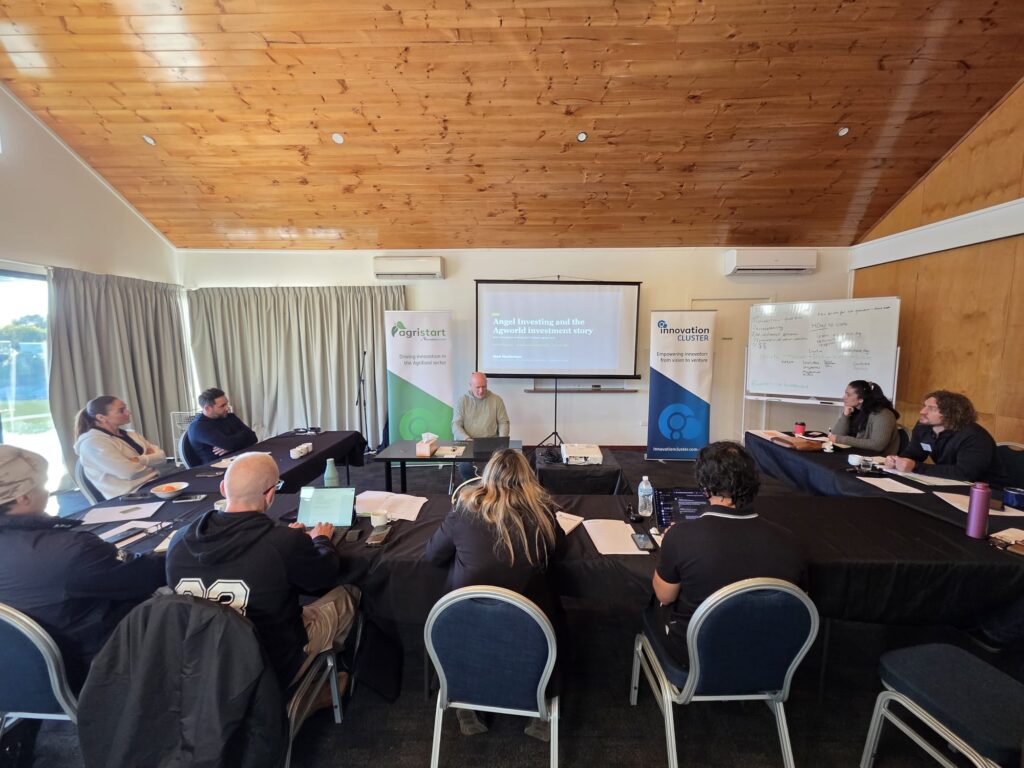
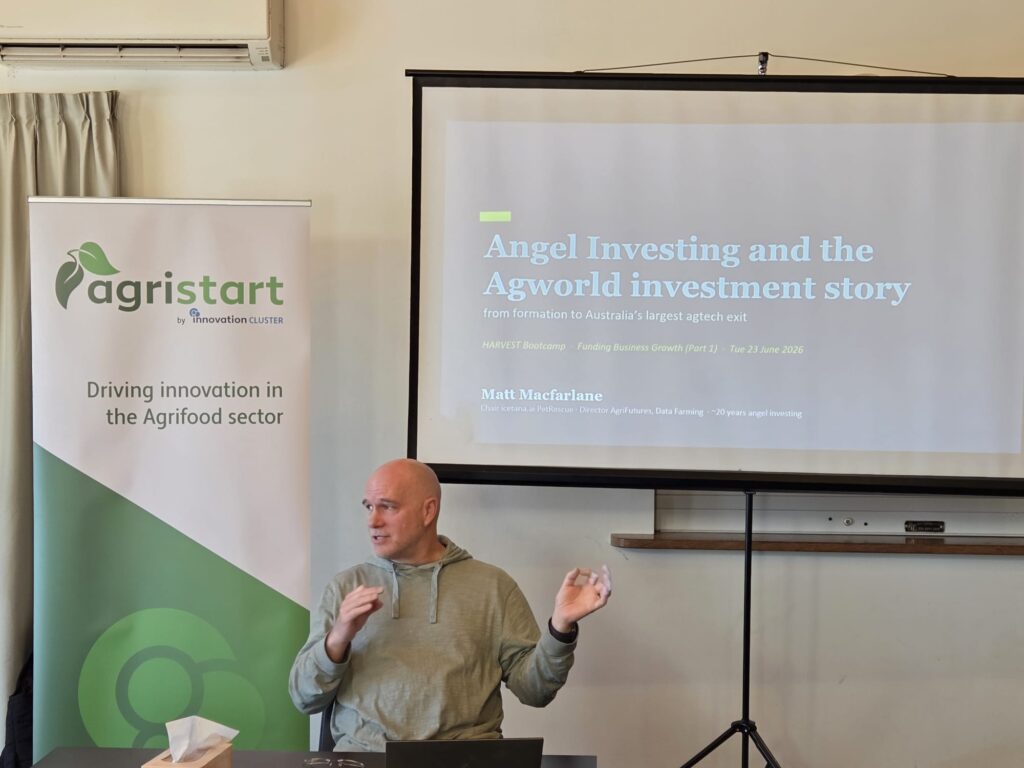
Funding Business Growth (Part 1): Angel Investing & the Agworld Story
Speaker: Matt Macfarlane — angel investor, Chair icetana.ai, Director AgriFutures & Data Farming
- Matt brought a rare perspective — someone who has sat on both sides of the investment table for over 20 years. His session covered how angel and VC investing actually works, grounded in his own numbers and the Agworld case study.
- Key insight: founder quality dominates everything else when an investor is deciding to invest. A great team with a mediocre idea beats a mediocre team with a great idea.
- Matt walked the cohort through the Agworld investment journey — from formation to acquisition
- The message: the best investors don’t just write cheques — they work alongside founders. The Agworld story took 11 years and required patience, trust, and active involvement.
6 Things Matt suggests that founders should do differently
- Make yourself genuinely coachable and become a powerful listener
- Say what you will do, then go and execute on it — don’t make excuses, take the hit, own the challenge
- Build a model that makes cash early and repeatably
- Sort your cap table and register for ESIC when raising
- Pick investors for stage and culture fit, not just the cheque — do your own due diligence on them
- Always have a Plan B — and say so out loud to anyone you pitch to
Funding Business Growth (Part 2): Grants, Investment & AgriSpace
Tash’s second session focused on navigating the funding landscape strategically — when to pursue grants, when to seek equity investment, and how to think about investor type and fit.
Message: aim for strategic capital, not just any capital.
Global Agtech Scaleup Story
Speaker: Hilbrand Kuikun, EOX Tractors
Hilbrand shared his experience scaling an agtech business internationally, drawing on his background across food production, processing and market development.
- Challenged the narrative that ag is a ‘difficult’ industry for startups — it has genuine structural advantages
- The farmer-operator is often also the decision-maker: this sits between B2B and B2C, shortening the decision-making timeline
- Highlighted the importance of understanding capex requirements before scaling — hardware-based businesses have different capital needs to software businesses
Waldijup Farm Tech Tour — Joel Kelly
Host: Joel Kelly, Waldijup Farms, Wheatbelt WA
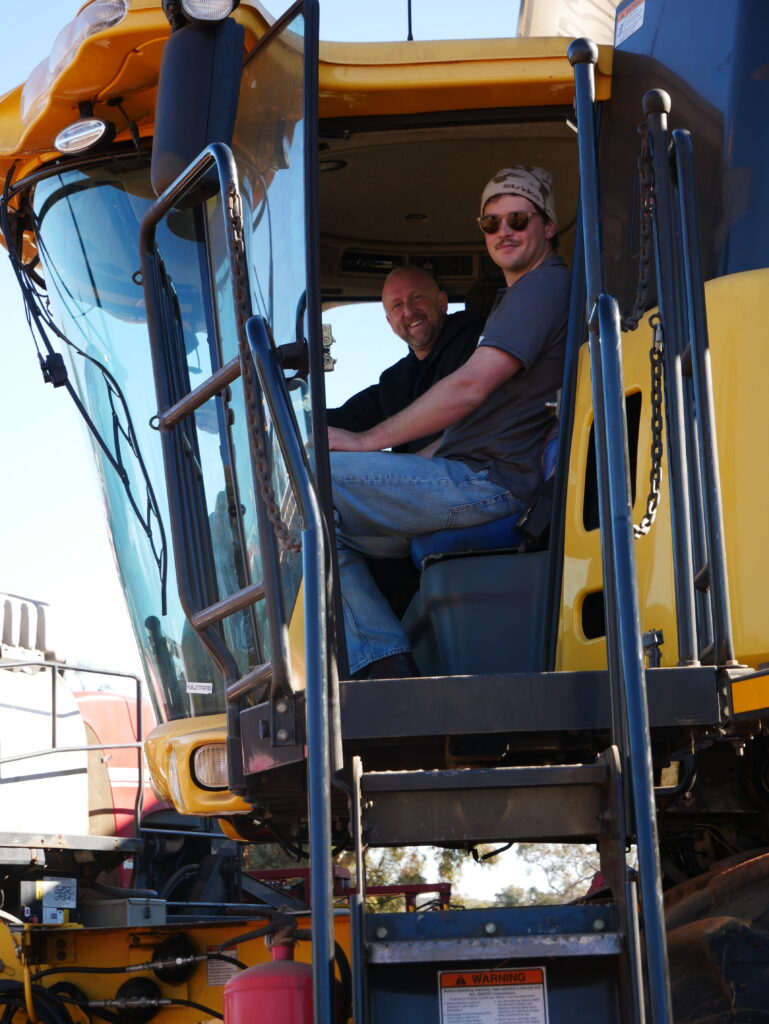
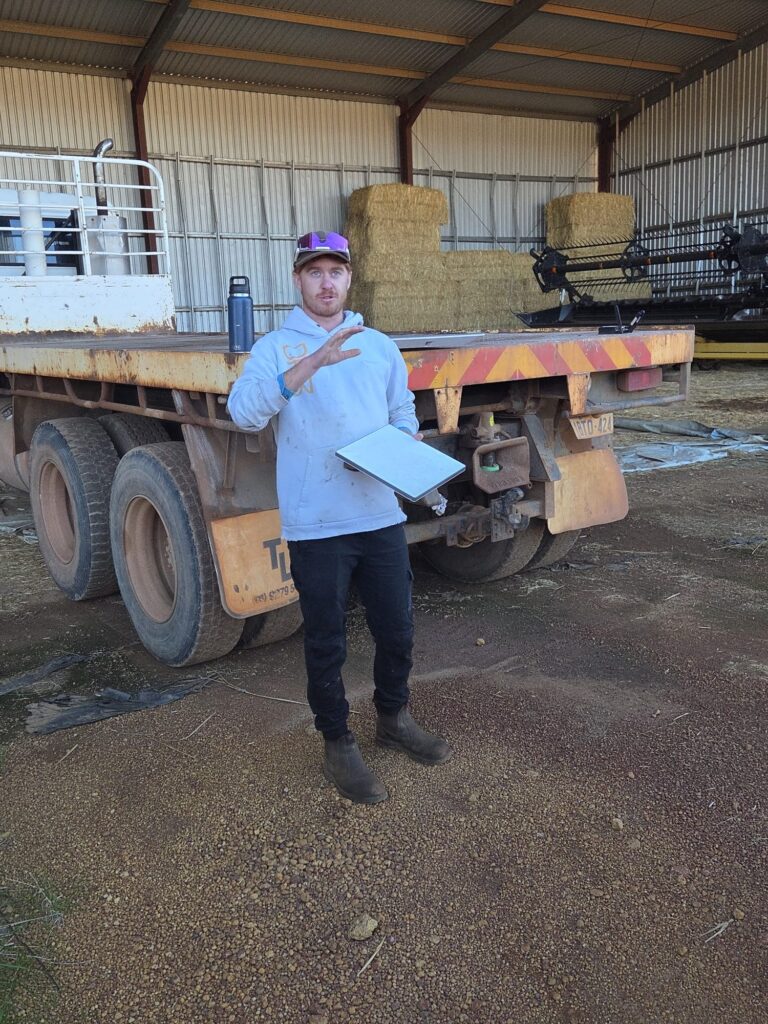
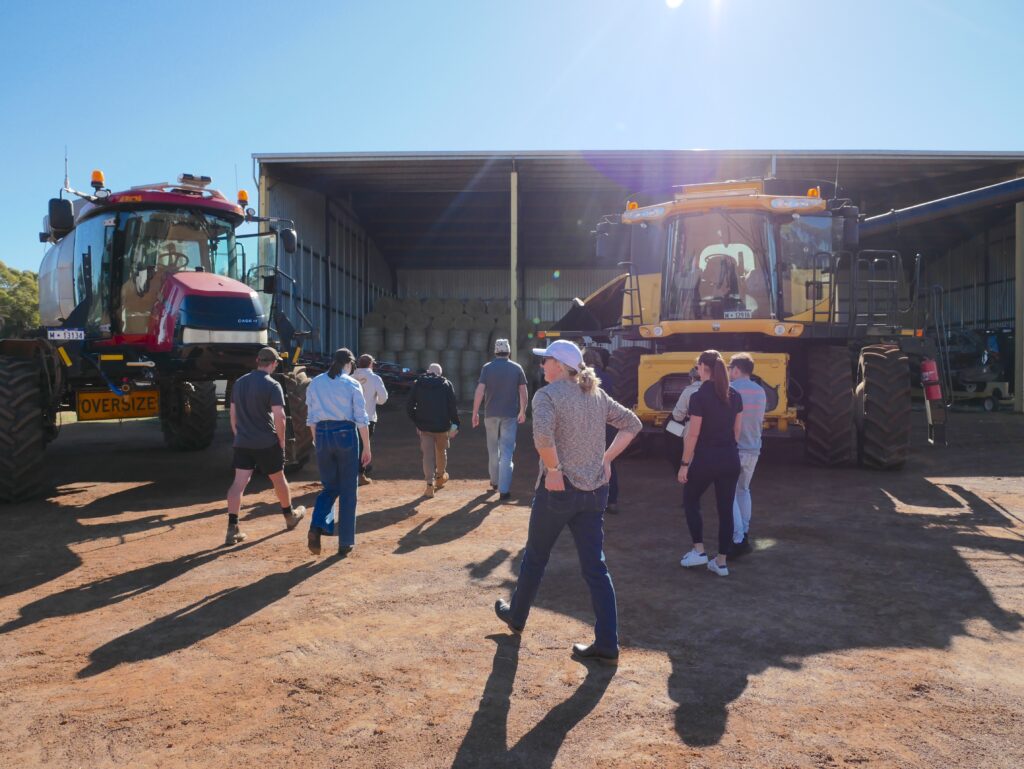
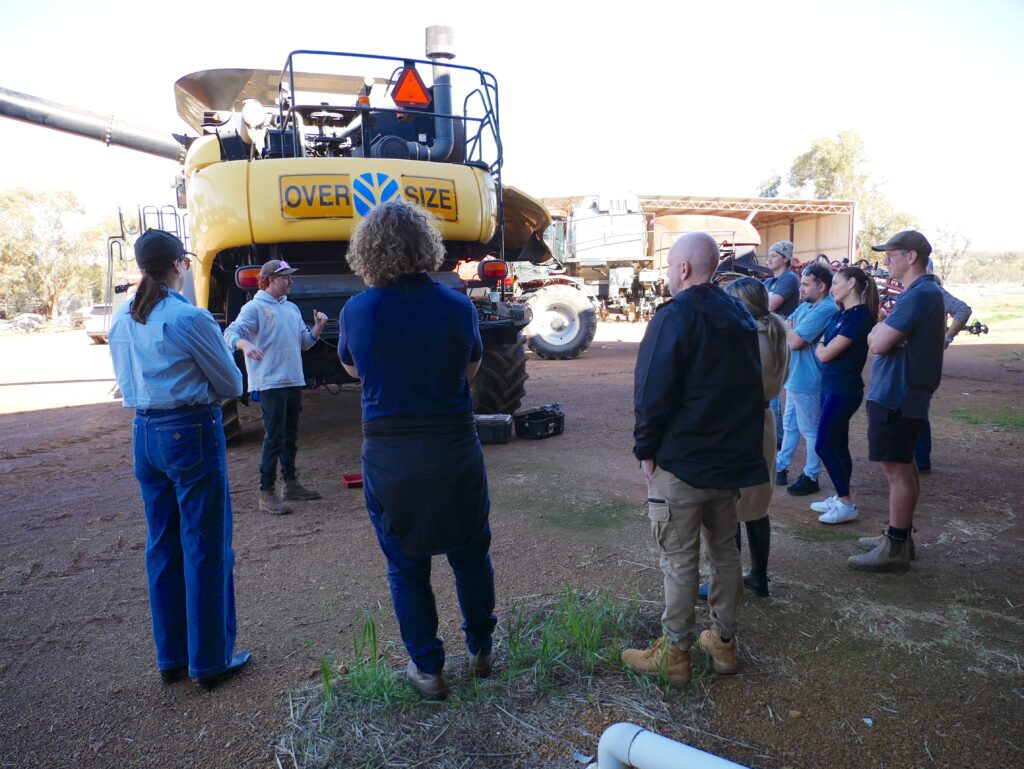
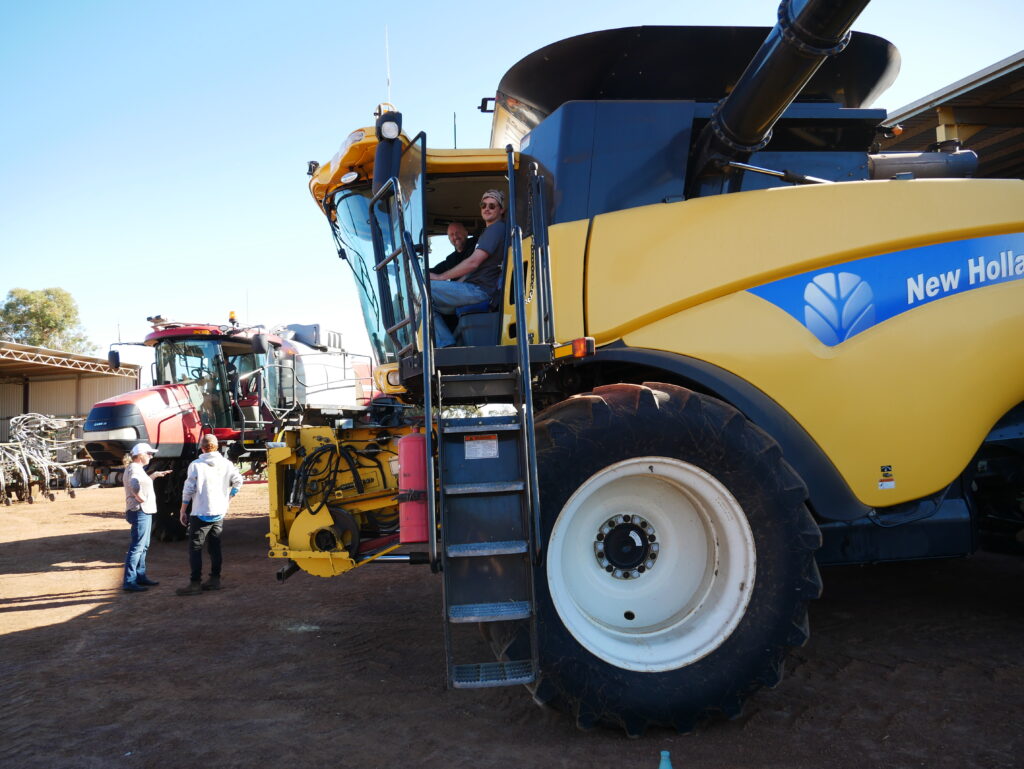
The bootcamp concluded with a hands-on farm technology tour at Joel Kelly’s Waldijup Farms — a working demonstration of agtech in a real paddock context. Joel has a strong background in livestock and machinery and is passionate about farm management software and precision agriculture.
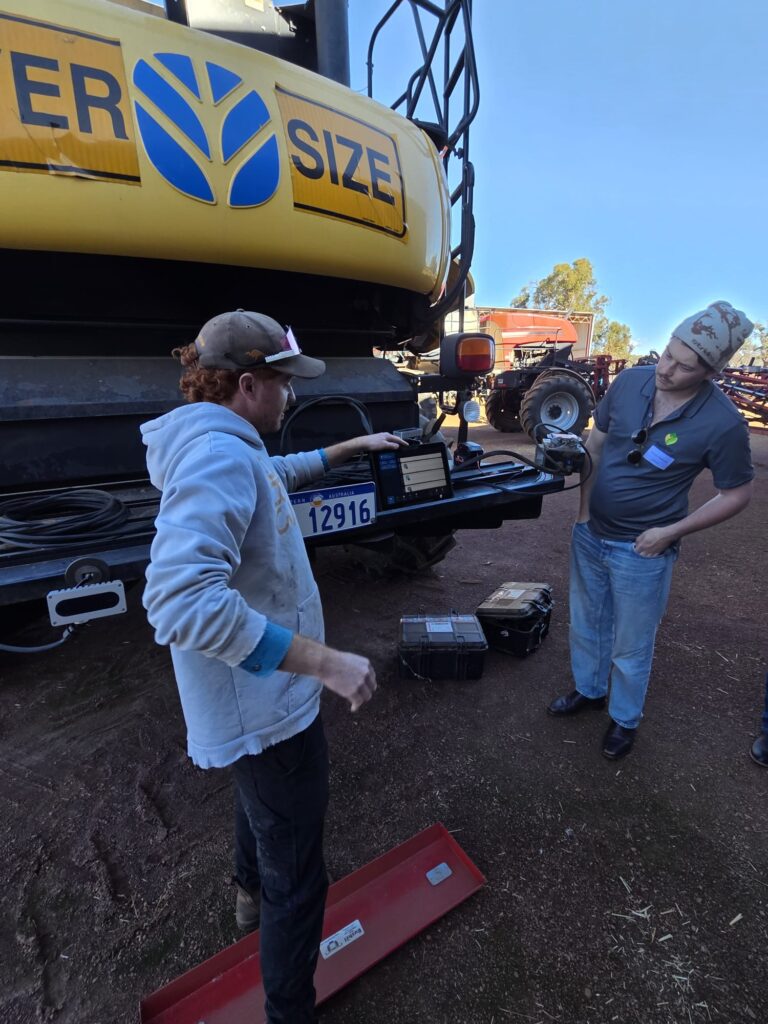
Joel shared the evolution of connectivity technology on his farm before taking us to the harvester header to a grain loss monitoring system that uses cameras and sensors to provide live feedback on harvest losses in both tonnes and dollars.
He emphasised the value of the data collected and the importance of close collaboration between agtech companies, growers and GRDC to trial and refine new technologies.
He then showed the tour a precision agriculture system that measures grain protein during harvest. Originally developed to maximise grain value through protein segregation, it has evolved into a tool for nitrogen management, frost mapping and improving crop productivity.
Next was a real-time precision agriculture platform that uses cameras and crop sensors to determine plant health to optimise nitrogen application and object detection, for determining live spot spraying and crop management as machinery moves through the paddock.
Throughout the discussion, he reinforced the importance of developing technology that is practical for farmers to install, cost effective, adaptable to changing farming practices, and capable of solving multiple problems rather than just one.
Closing Themes
The Cohort’s Journey Map
The group self-identified where they sit on the commercialisation journey — from Validate through to Scale. The diversity across the cohort (some testing, some raising, some already scaling) gives a rich picture of the WA agtech ecosystem at different stages.
What Growers Actually Want
The growers panel delivered unfiltered feedback rarely heard in polished conference settings. Integration, data ownership, time, support — these are the real pain points. For agtech founders, this is the most valuable few hours of the program.
The Human Side of Startups
Simon Foley’s Trust/Choice/Cash framework is a gift for founders at any stage — not a funding model, but a philosophy of how to build sustainably. Matt’s 20-year perspective reinforces this: it’s about founder quality above all else.
WA’s Moment
There’s an underlying theme across all sessions that WA has genuine advantages — innovative growers, research expertise, clean green credentials — and the HARVEST program is one of the ways those advantages get mobilised.
HARVEST is also proudly sponsored by Wrays | Intellectual Property, Radium Capital, and EZI Group Esperance Zone Innovation.